
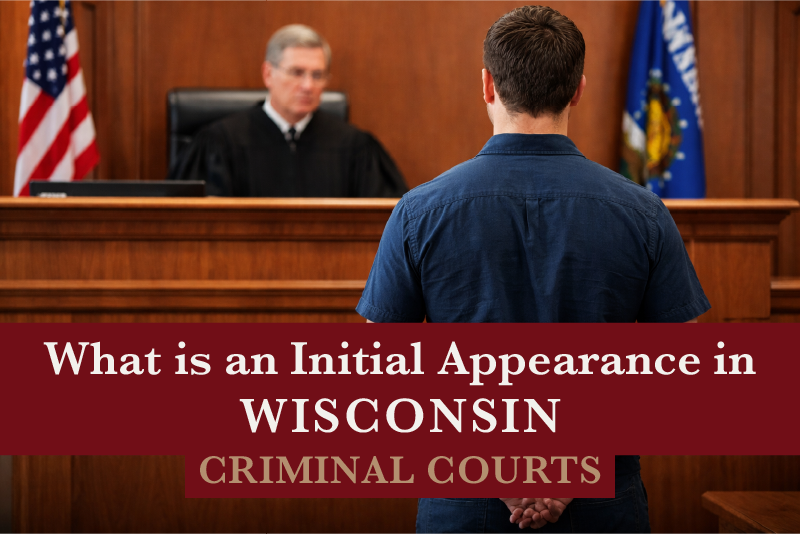
What Is an Initial Appearance in Wisconsin Criminal Court?
In Wisconsin, an initial appearance is the first court hearing after an arrest, where the judge formally advises the defendant of the charges, addresses bail or bond conditions, and determines representation by counsel. It typically occurs within 48 hours of arrest and sets the procedural foundation for the rest of the criminal case. Although no determination of guilt is made, what happens at an initial appearance can significantly affect bail, custody status, and how the case proceeds.
What the Law Says About Initial Appearances in Wisconsin
Initial appearances in Wisconsin criminal cases are governed primarily by Wis. Stat. § 970.01. This statute requires that a defendant be brought before a judge promptly after arrest and outlines the issues the court must address at this first hearing.
At an initial appearance, the court generally must:
- Inform the defendant of the charges
- Address bail or conditions of release
- Advise the defendant of the right to counsel
While the statute establishes minimum requirements, how these hearings are handled in practice often varies by county and judge. Understanding those nuances is one reason many people consult a Wisconsin criminal defense attorney early in the process.
When Does an Initial Appearance Occur?
In most cases, an initial appearance must occur within 48 hours of arrest, excluding limited circumstances such as weekends or holidays. The timing often depends on whether the person remains in custody or is released before seeing a judge.
If someone is arrested on a felony charge, the initial appearance is typically the first step after the arrest and booking process described in what happens after a felony arrest in Wisconsin.
What Happens at an Initial Appearance?
Formal Notice of Charges
At the initial appearance, the judge formally advises the defendant of the charges filed by the State. This is not a trial, and no evidence is weighed. The court simply ensures the defendant understands what they are accused of.
Bail or Bond Determination
One of the most important functions of the initial appearance is addressing bail. The court may:
- Set a cash bond
- Impose conditions of bond
- Modify or maintain existing release conditions
Bail decisions are based on factors such as risk of flight, community safety, and prior history – not guilt or innocence. Learn more about how bail and bond works in Wisconsin.
Right to Counsel
The court will determine whether the defendant intends to hire an attorney or qualifies for appointed counsel. If the defendant is eligible, the State Public Defender may be appointed.
What Does Not Happen at an Initial Appearance
There are several common misconceptions about this hearing.
- Guilty pleas are not an option
- No witnesses testify
- No determination of guilt or innocence is made
- The case is not resolved at this stage
The initial appearance is procedural, but its consequences – especially regarding bail – can be lasting.
How the Initial Appearance Fits Into the Larger Criminal Case
For felony cases, the initial appearance is often followed by a preliminary hearing, unless it is waived or the case is resolved early. The preliminary hearing serves a different function and has a different legal standard.
Understanding this progression is critical in felony cases and often becomes a key part of a broader felony defense strategy in Wisconsin.
Defense Perspective: Why the Initial Appearance Matters
From a defense standpoint, the initial appearance is often the first opportunity to influence the direction of the case. Bail conditions set at this stage can determine whether someone remains in custody, maintains employment, or has the ability to participate meaningfully in their defense.
Early involvement by a felony defense lawyer in Wisconsin can help ensure that bail arguments are presented effectively and that rights are protected from the outset.
Frequently Asked Questions
Related Practice Areas
Serving Madison & Southern Wisconsin
We represent individuals charged with felony, misdemeanor and OWI offenses in Madison and throughout Dane, Rock, Iowa, Green, Columbia, Dodge, Sauk and Jefferson Counties.
Facing a Criminal Charge?
Speak with a Wisconsin Criminal Defense Attorney – Free and Confidential Consultation.